

Ethnic women entrepreneurs have shared their powerful stories of resilience and success in a new report, Ethnic Women Entrepreneurs: Amplifying impact for New Zealand.
The report was commissioned by our Ministry and was produced by Ziena Jalil, Co-founder, NZ Ethnic Women Entrepreneurs Network. It is understood to be the first report of its kind in Aotearoa.
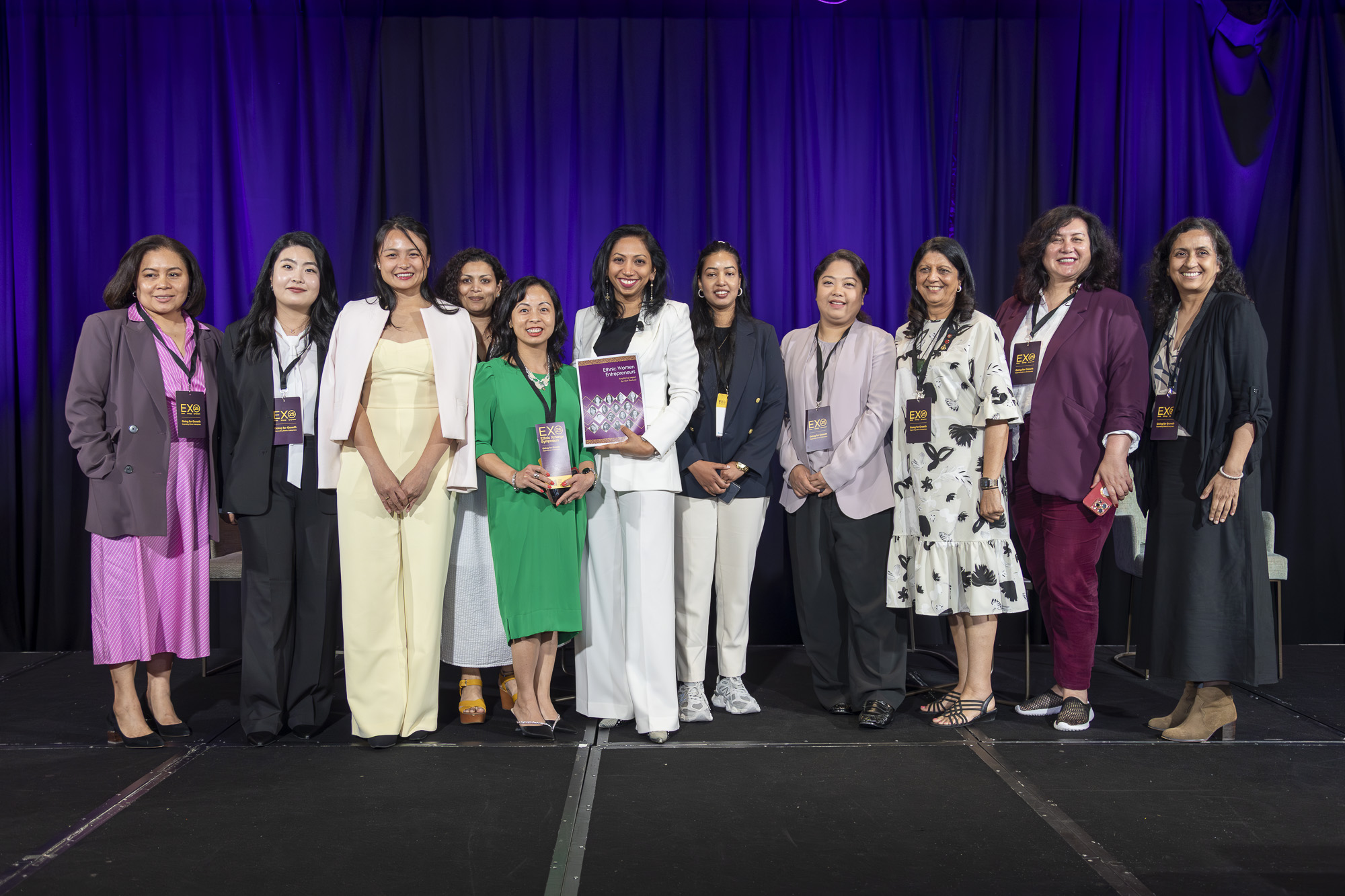
Launched at Ethnic Xchange 2025 (EX25), the report is the result of months of research and in-depth interviews with 16 ethnic women entrepreneurs.
The report found that ethnic women entrepreneurs drive innovation, create jobs and strengthen export capacity, making them an integral part of the New Zealand economy. However, their contributions often remain undervalued, under measured, and under supported.
Drawing on in depth conversations with 16 ethnic women entrepreneurs from a range of industries, the report captured collective challenges and success factors, and made recommendations at the system, structural and grassroots levels.
"It is infinitely harder as a young female with a name like mine to secure funding. A very senior and experienced executive told me she had never seen a business of my maturity have to go through the hoops I needed to."
Ethnic women entrepreneur (anonymous)
Shared challenges
Many of the entrepreneurs interviewed faced similar challenges when starting and growing their businesses. These challenges, such as racial and gender bias, are highlighted in the entrepreneur’s individual stories, which are found throughout the report.
Common barriers included:
- Funding and financial barriers - Access to capital remains the most consistent challenge.
- Systemic bias and representation - The entrepreneurs repeatedly described experiences of systemic bias, discrimination, and exclusion across business and investment ecosystems.
- Limited access to networking, mentorship, and peer support - This was particularly challenging for first-time or newly arrived entrepreneurs.
- Cultural and language barriers - Language proficiency, communication styles, and cultural norms significantly affect confidence, visibility, and access to support.
Factors for success
There were also common themes which drove the success of the entrepreneurs’ businesses. These are rooted in purpose, community and connection.
Common success factors included:
- Purpose, passion, and personal values - Many of their business ideas formed from their desire to solve a problem they had personally experienced or witnessed.
- Community connection and social capital - Many businesses were designed to celebrate heritage, uplift others, and create belonging.
- Mentorship, role models, and representation - The entrepreneurs described mentorship as being a critical factor to their success and said that seeing other women of colour in leadership roles was often transformative.
- Partners, networks, collaboration, and peer learning - The entrepreneurs emphasised the importance of trusted networks and collaborations to foster opportunities for joint ventures, shared resources, and collective visibility.
Recommendations
The report makes eight main recommendations across system, sector and grassroots levels.
The recommendations are underpinned by the following themes:
- Equity over equality - Targeted, differentiated investment to close historic gaps.
- Co-design and partnership - Ethnic women must be active shapers, not passive recipients, of policy.
- Data and accountability - Progress should be measurable and publicly reported.
- Wellbeing and inclusion - Success is defined not only by profit but by purpose, balance, and belonging.
The entrepreneurs called for more dedicated and inclusive funding streams, stronger networks and greater opportunities for mentorship. They wanted to see greater representation in leadership, and for ethnic women entrepreneurs and their work to be more visible.
The report adds to a growing evidence base of the experiences of ethnic women entrepreneurs in New Zealand, and follows earlier initiatives from our Ministry, including the Ethnic Women Entrepreneurs Roundtable in August 2025. At the roundtable, women shared similar sentiments to those included in the report. Wanting greater networking opportunities, they also formed the NZ Ethnic Women Entrepreneurs Network, which now has more than 140 members.
At our Ethnic Xchange 2025 business symposium, the panel session, Breaking barriers: The stories of ethnic women entrepreneurs, brought their collective stories to life, with two women interviewed for the report sharing their experiences with the more than 450 people in attendance.