

On this page
Overview
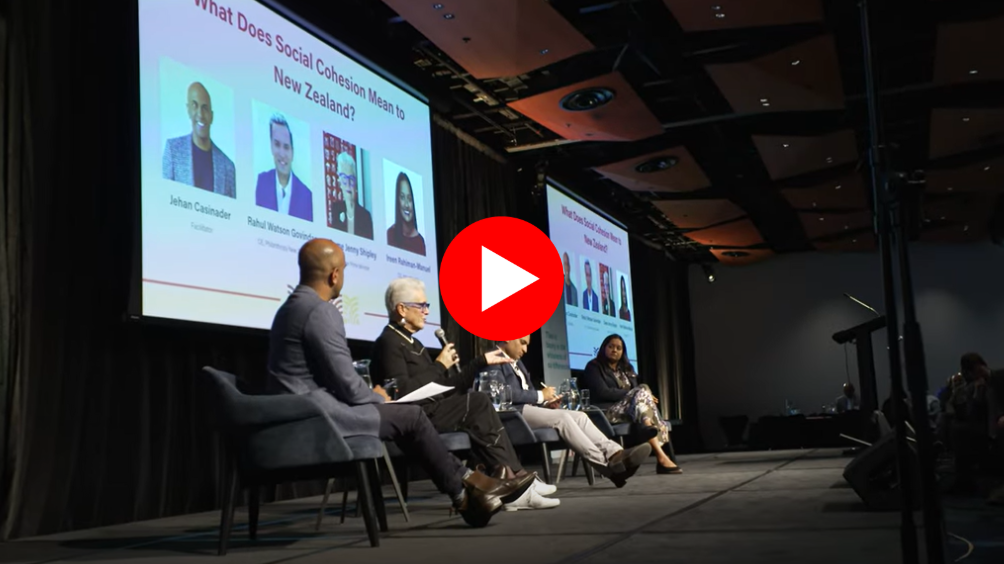
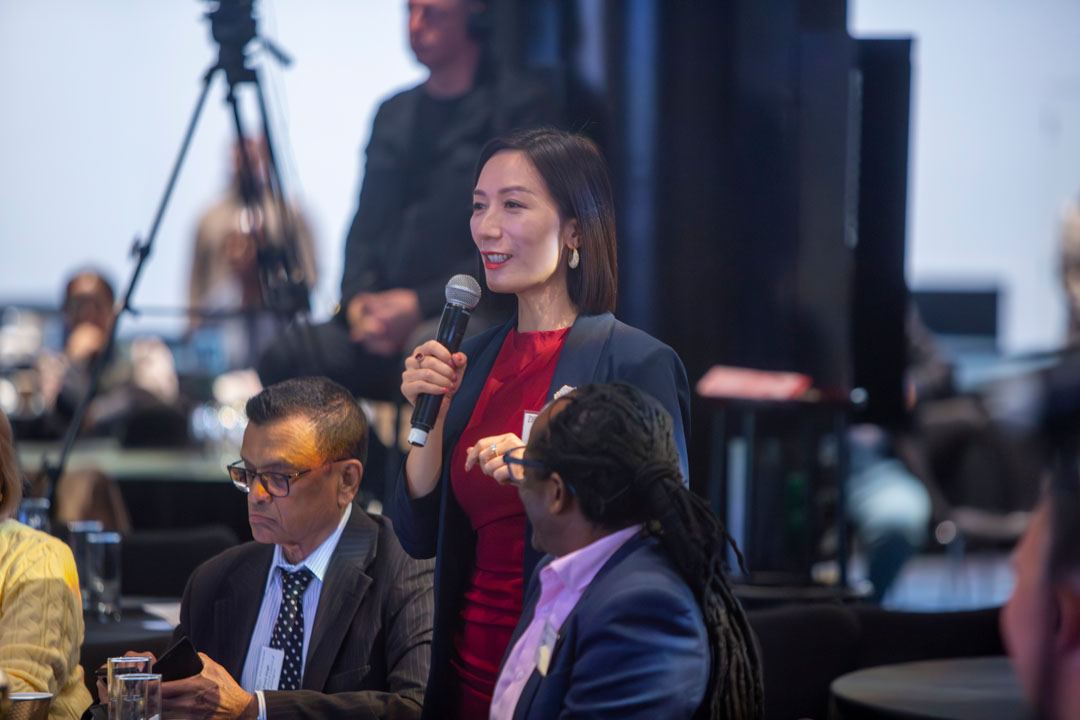
More than 300 ethnic community leaders, service providers, faith leaders, and government officials across the country gathered at Auckland’s Aotea Centre on 28 June for the Ethnic Advantage 2025 conference.
Ethnic Advantage is the Ministry for Ethnic Communities’ strategic engagement platform. This annual conference offers people from Ethnic Communities a space to connect, share insights, and grow together. It brings together leaders and changemakers to drive inclusive solutions, foster collaboration, and build a stronger Aotearoa New Zealand.
Programme
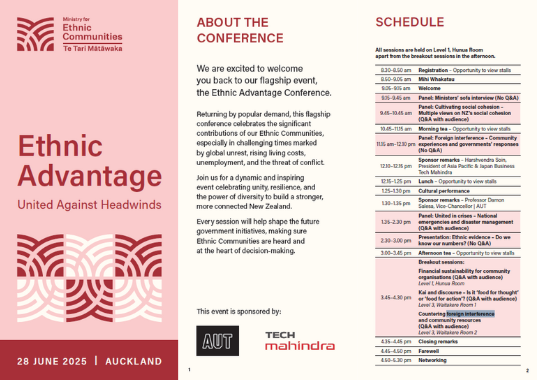
The Ethnic Advantage 25 programme featured four panel sessions, one presentation, three breakout sessions, a Mihi Whakatau, opening and closing remarks, and multiple networking opportunities. With a total of 21 speakers, the conference was vibrant and thought-provoking from beginning to end.
The sessions covered topics including cultivating social cohesion, foreign interference, national emergencies, and disaster management.
A call for unity, resilience and collective action
Ngāti Whātua Ōrākei opened the day with a mihi whakatau, acknowledging mana whenua. Broadcaster Jehan Casinader moderated the event. The Ministry’s Chief Executive Mervin Singham welcomed attendees.
“If we want to shape the future, indifference isn’t an option,” said Mervin Singham. “each one of us has to be a steward of what is right in our society.”
Ethnic Advantage video interviews
-
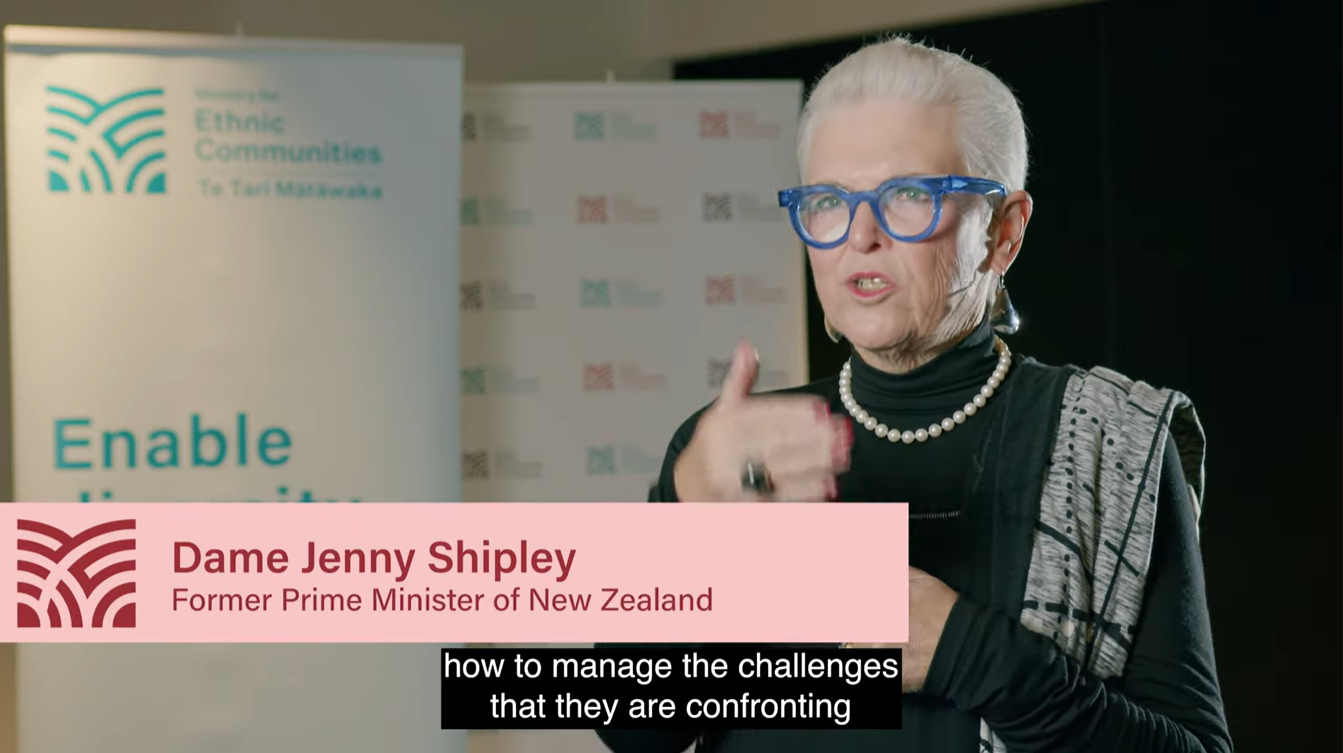
Dame Jenny Shipley
Former Prime Minister
-
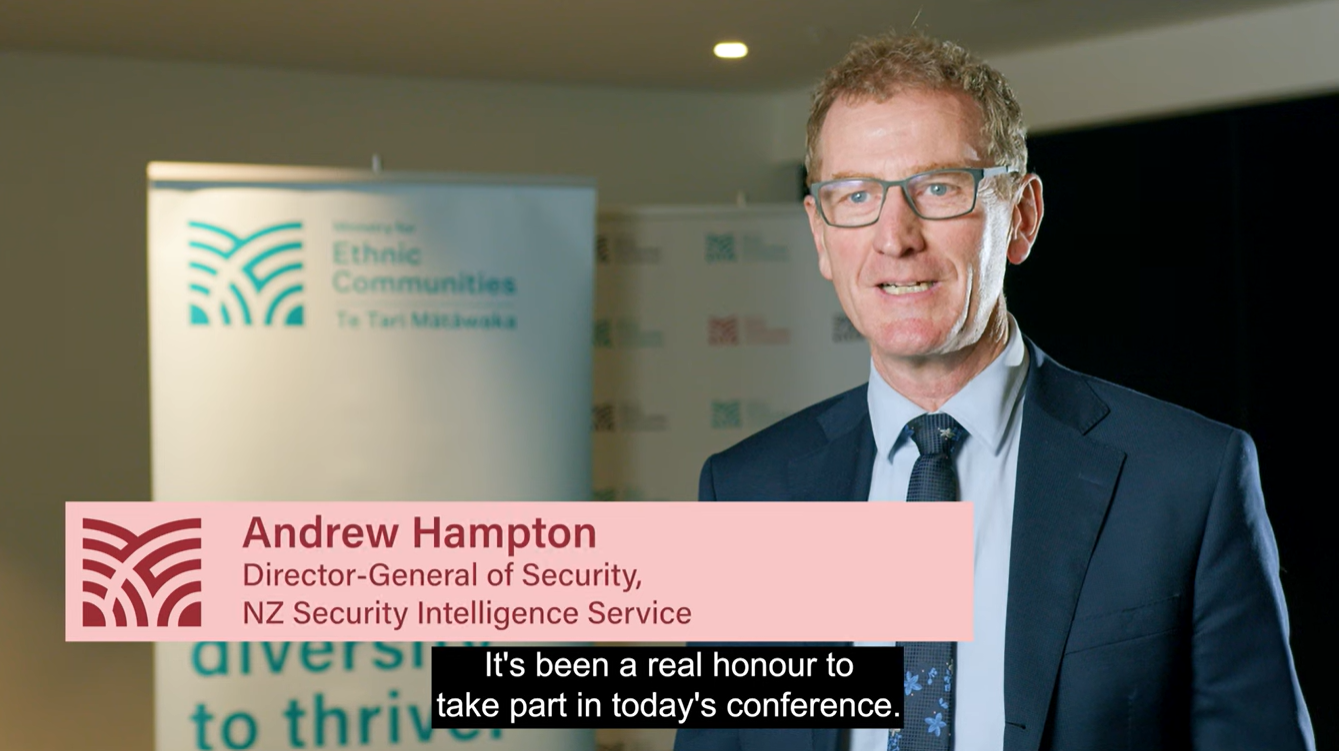
Andrew Hampton
Director-General, New Zealand Security Intelligence Service (NZSIS)
-
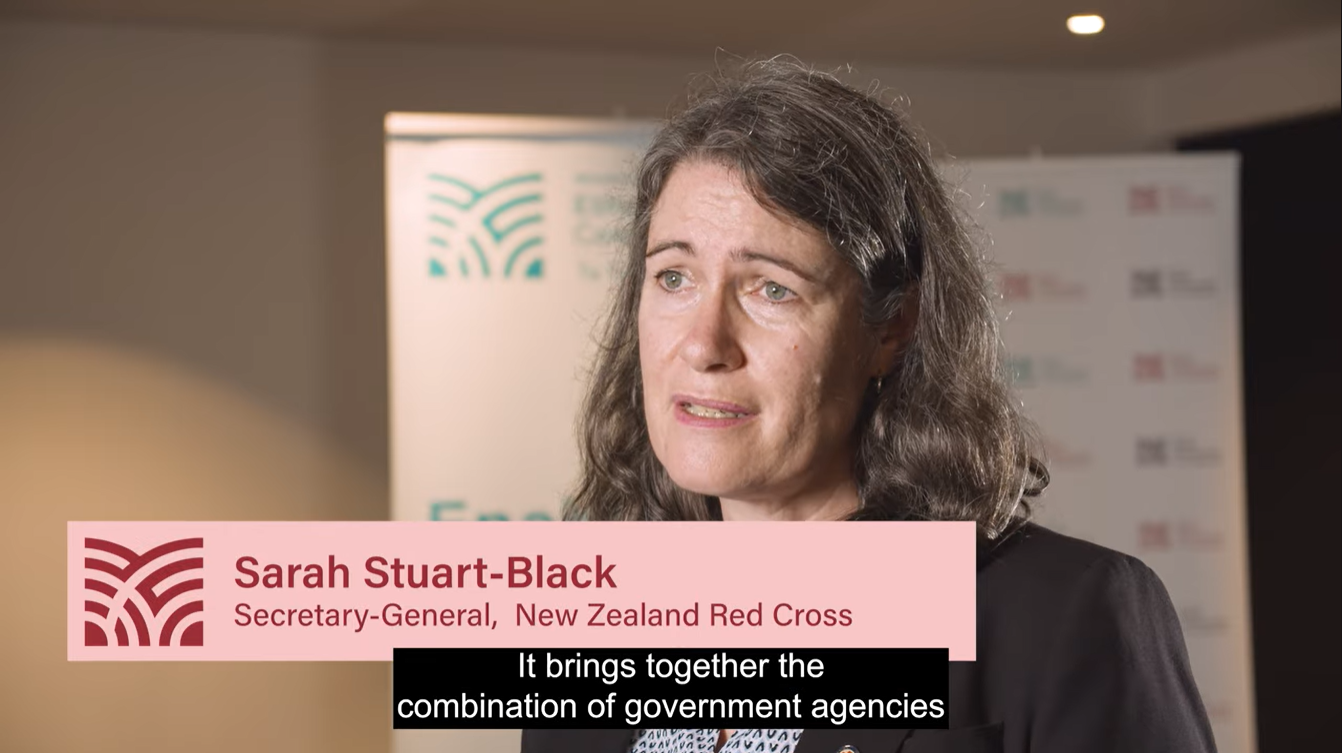
Sarah Stuart-Black
Secretary-General, New Zealand Red Cross
-
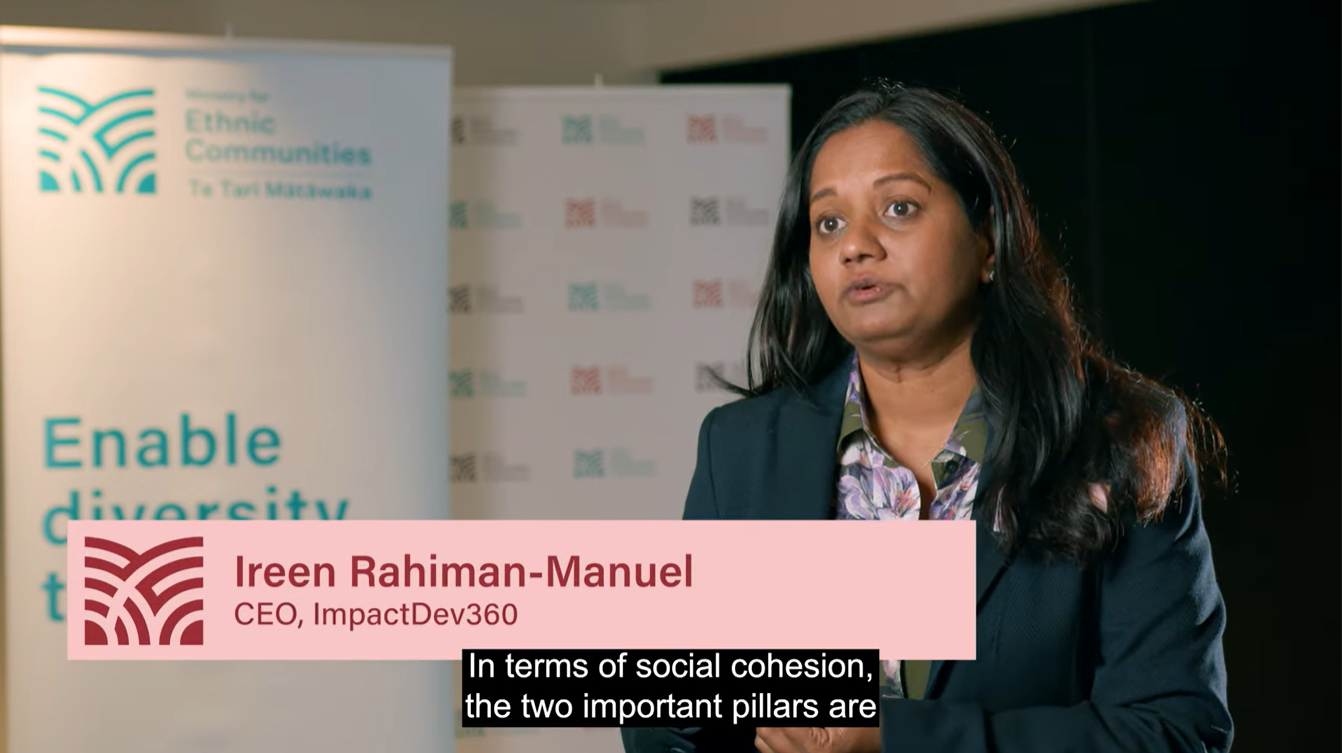
Ireen Rahiman-Manuel
CEO, ImpactDev360
Ethnic Advantage short video interviews
-
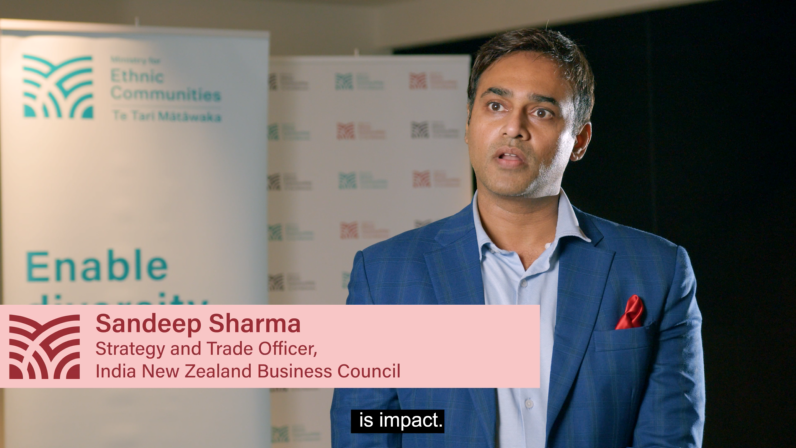
Sandeep Sharma
Strategy and Trade Officer, India New Zealand Business Council
-
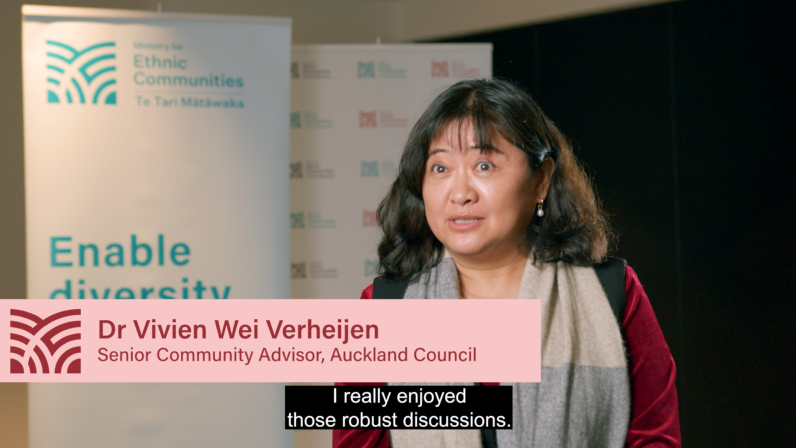
Dr Vivien Wei Verheijen
Senior Community Advisor, Auckland Council
-
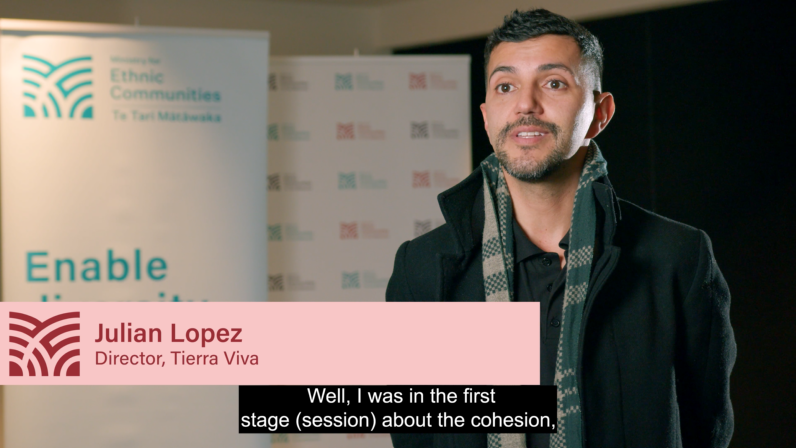
Julian Lopez
Director of Tierra Viva
-
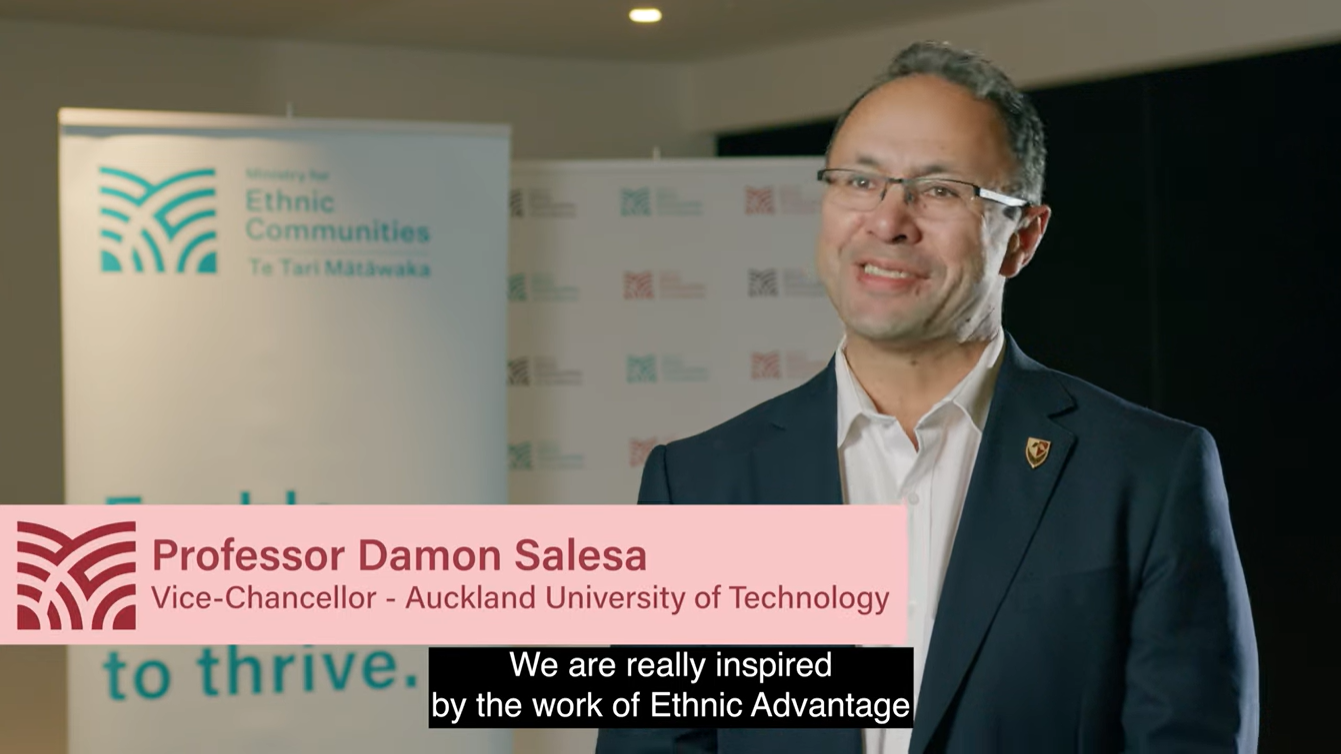
Auckland University of Technology (AUT)
Professor Damon Salesa (Vice-Chancellor, Auckland University of Technology)
Speaker interviews
Panel sessions
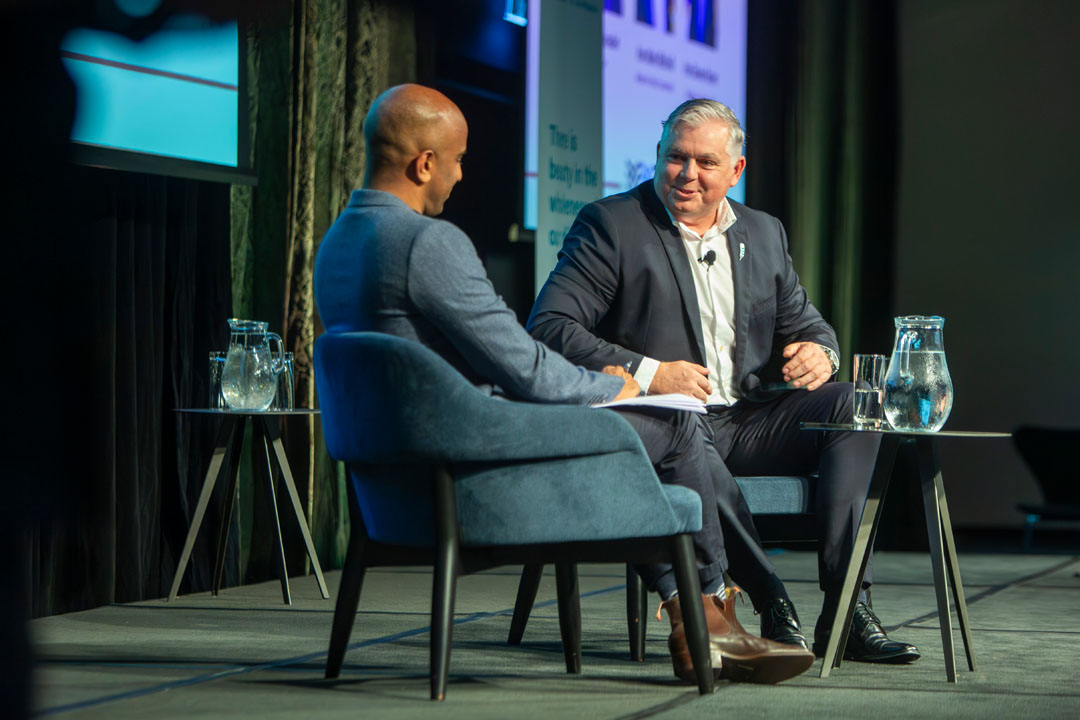
Ministers’ sofa interview
Hon. Mark Mitchell, Minister for Ethnic Communities, emphasised at the Ministers’ Sofa Session, “We are a beautifully diverse country, and that makes us much stronger,” and that “we can send a powerful message to the world: that we can have differences, but still come together in peace.”
Cultivating social cohesion –Multiple views on NZ’s social cohesion
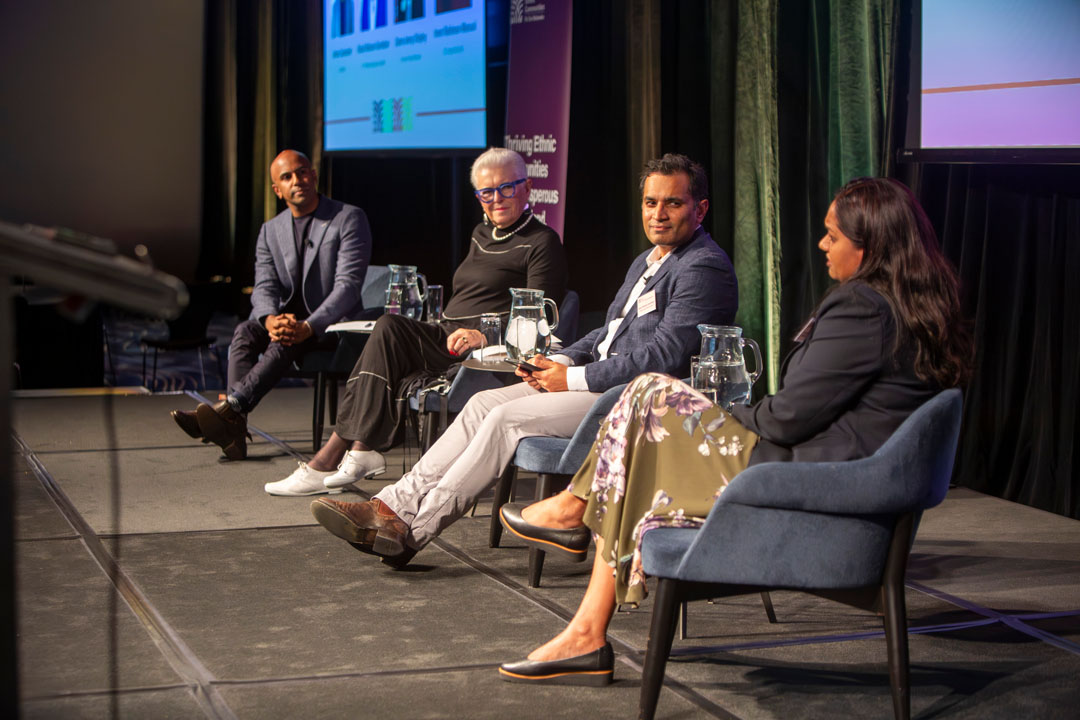
A panel discussion on social cohesion, moderated by Jehan Casinader, featured Dame Jenny Shipley, - Former Prime Minister of New Zealand, Rahul Watson Govindan - Chief Executive of Philanthropy New Zealand, and Ireen Rahinman-Manuel - Chief Executive Officer of Impactdev360. Dame Jenny Shipley shared that “social cohesion doesn’t happen by accident,” and emphasised that “it’s something we must build together, every day, through empathy, inclusion, and shared purpose.”
Foreign interference – Community experiences and governments’ responses
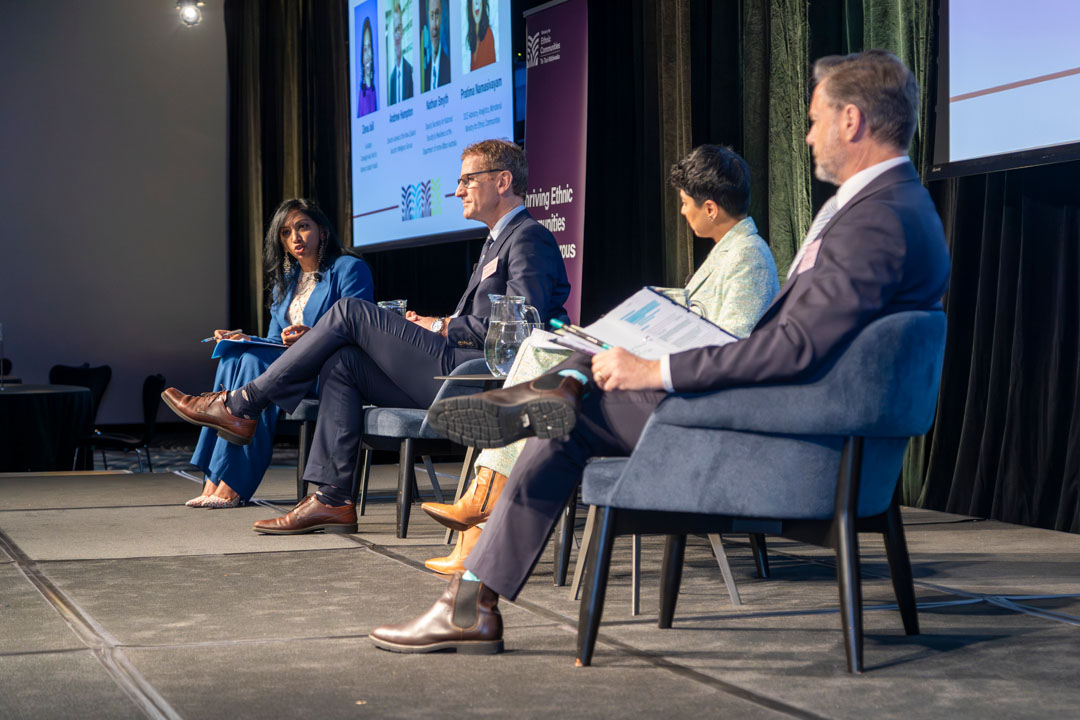
Ziena Jalil - Commissioner at the Natural Hazards Commission, moderated a panel on foreign interference featuring key voices in foreign interference. The panel included Andrew Hampton - Director-General of Security at the New Zealand Security Intelligence Service, Pratima Namasivayam - Deputy Chief Executive for Advisory, Analytics and Ministerial at the Ministry for Ethnic Communities, and Nathan Smyth - Deputy Secretary General for National Security and Resilience at the Department of Home Affairs, Australia.
Pratima Namasivayam encouraged communities to “celebrate your culture, celebrate your heritage,” while urging vigilance. Andrew Hampton added that “this is not about limiting your democratic rights, this is about protecting them from the influence of others,” and Nathan Smyth called on people to “be an active participant” and “call out interference when you see it.”
United in crises – National emergencies and disaster management
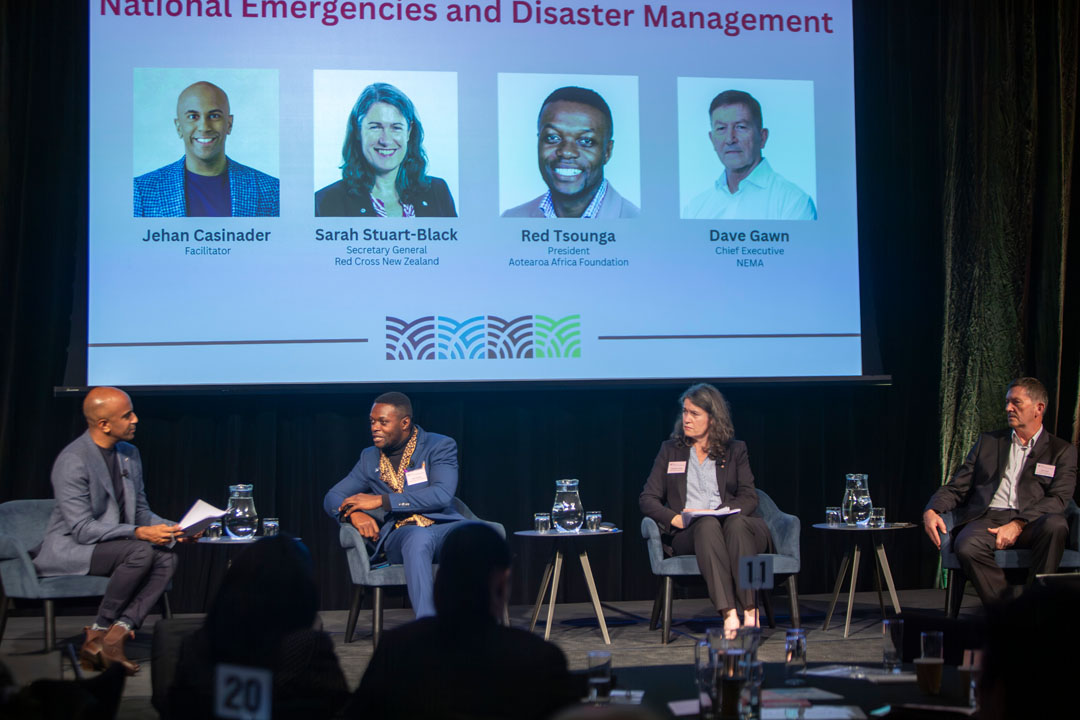
Emergency preparedness was another key focus. Jehan Casinader moderated a panel with Dave Gawn - Chief Executive of the National Emergency Management Agency, Red Tsounga - President of the Aotearoa Africa Foundation, and Sarah Stuart-Black - Secretary-General of the New Zealand Red Cross. Dave Gawn stressed the importance of understanding “what preparedness means for us as individuals, families, and communities,” while Red Tsounga highlighted that “Ethnic Communities should be involved in designing emergency plans—not just translating them.”
Presentation
Ethnic evidence – Do we know our numbers?
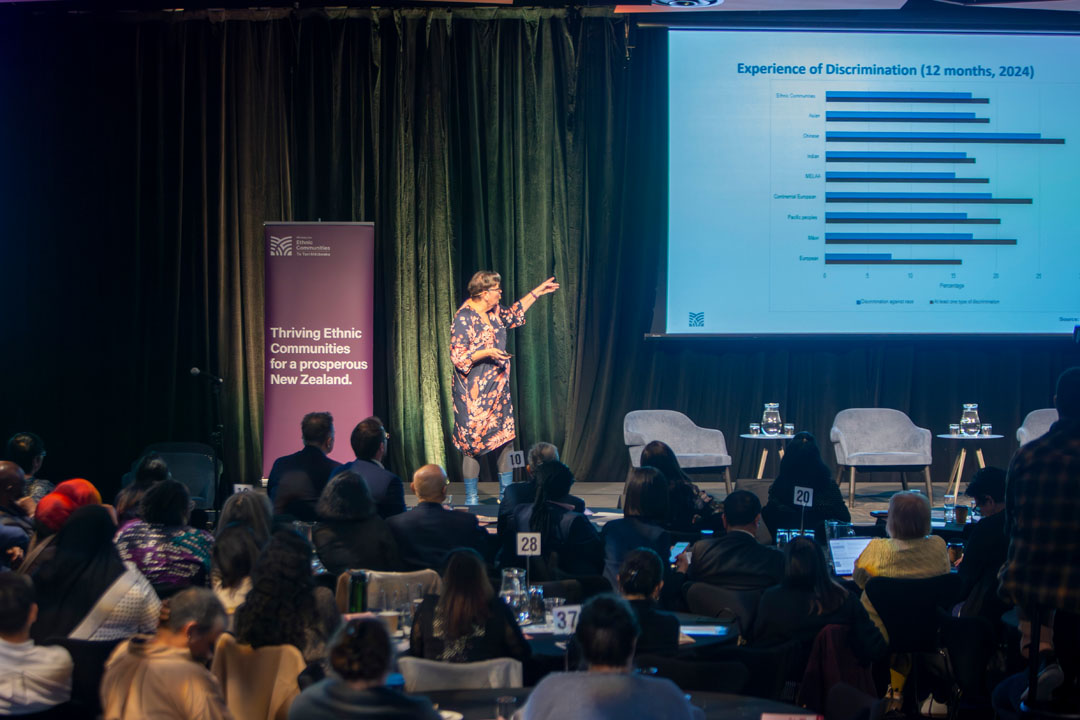
Deb Potter - Principal Analyst at the Ministry for Ethnic Communities, presented findings from the Ethnic Evidence Report. The report highlights the contributions of over 1.1 million people from Ethnic Communities and their growing role in New Zealand’s future. It also addresses challenges across areas such as youth identity, discrimination, emergency and civic engagement. The insights will help shape future policy and investment to better support Ethnic Communities.
Breakout sessions
The breakout sessions featured a range of community leaders and experts.
The session on financial sustainability for community organisations explored strategies to maintain long-term financial health. It also looked at how leaders can diversify income sources and build more adaptable leadership. The session was moderated by Berlinda Chin, Chief Advisor to the Chief Executive and Acting Deputy Chief Executive for Strategic Engagement and Stakeholder Insights at the Ministry. The panel featured Jenny Wang - Founder of Chinese New Settlers Services Trust (CNSST ) Founding; Dr Anwar Ghani - Director of Amanah Ethical and NZI Products & Services, A. K. Yap - Asian Engagement Advisor at Community Leisure Management (CLM ) Community Sport, and Rahul Watson Govinda - Chief Executive of Philanthropy New Zealand.
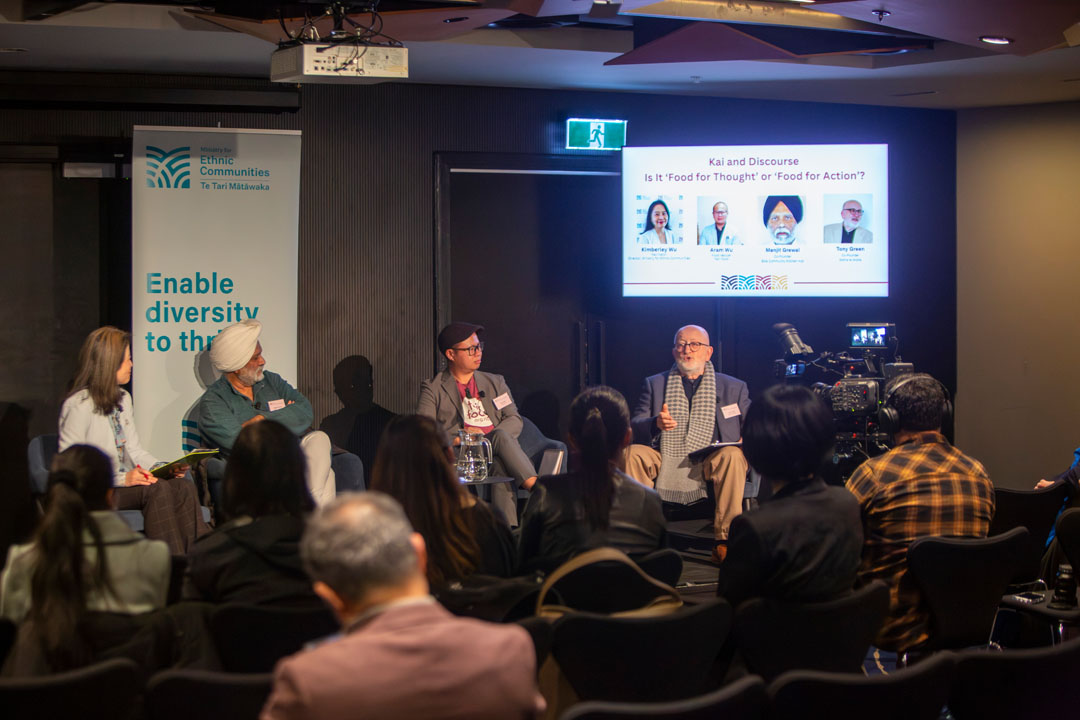
The Kai and Discourse session, moderated by Kimberley Wu, Director of National Operations at the Ministry for Ethnic Communities, featured Manjit Grewal, Co-Founder of Ekta New Zealand; Tony Green, Co-Founder of Mahia te Aroha; and Aram Wu, Food Rescuer at Fair Food. Speakers shared practical insights and community-driven approaches to sustainability and inclusion.
The Countering Foreign Interference and Community Resources, moderated by Ruksana Shaikh - Director of Security and Resilience at the Ministry for Ethnic Communities, featured Sean Hansen - Director of National Security & Detective Superintendent at New Zealand Police, and Blair W from the New Zealand Security Intelligence Service. Speakers discussed strategies for countering foreign interference and shared resources to support and strengthen communities.
Looking ahead
Ethnic Advantage 2025 showed our support for inclusive leadership, civic involvement, and working closely with Ethnic Communities. We will keep building on this by staying connected and working together through future events and projects.
“Let’s build solidarity and consensus in actions that can help shape Aotearoa into a strong, cohesive society,” said Mervin Singham, the Ministry’s CE. “Because when times get tough, we come together — and we hold tight.”
Ethnic Advantage photos
Many thanks to our valued sponsors and partners for supporting Ethnic Advantage. The event was sponsored by Auckland University of Technology and Tech Mahindra.
Information stalls:
- Department of Internal Affairs
- Inland Revenue Department
- Auckland Council Local Elections
- Auckland Council Emergency Management
- Diversity Counselling
- Foundation North
- New Zealand Police
- Electoral Commission
- Te Whatu Ora Asian and Ethnic Health Services
- She Sharp
Video transcripts
-
Question one: How does the theme of today’s conference ‘United Against Headwinds’ resonate with you and your leadership journey?
I think it's fantastic that people are here thinking about how to manage the challenges that they are confronting and come up with strategies to respond. And there are many speakers who will help them on their journey. Just as when I was young, often people would help me have a moment to think. I'll use that in the way that I move forward.
I think the team also invites us not only to see a headwind, but weather is an ethnic community because we are who we are, it's a tailwind. I think there is an opportunity for the New Zealand ethnic community, they are going to have a competitive advantage and be special in their relationship to how they can advance the New Zealand of their generation. So yes, there are headwinds, but let's also look for the advantages that our migrant community bring, not only now, but I think it's going to amplify, not become more difficult.
Question two: How do you see the future of ethnic leadership in New Zealand?
Look, I think it's several pronged. I would encourage our Ethnic Communities to stay rich in their cultural traditions if it adds to who they are, but who they and their children will be in the broader community is about sharing. So invest personally or in your culture and in your religious groups and in your countries of origin if it matters enormously to the who-ness of who you are. Because often that strengthens our identity as we bring our whole selves into our new lives. So treasure the old and enrich it, but open up and share it in a new sense.
That's how nations are built. And as a country where we've invited many in, including my ancestors who came here in, you know, the 1840s. We were new New Zealanders once. And so how did we cope? How will we cope? What will we need to do to cope next? I want to encourage our young migrants to bring their rich culture in terms of who they are, but share it as they build a nation together and bring the tailwind as well as the challenge of managing the headwind.
-
Question one: Within the theme of United Against Headwinds, what’s your message to the Ethnic Communities?
It's been a real honour to take part in today's conference. National security is something that NZSIS (NZ Security Intelligence Service) does for and with communities, not to communities. Whether we're talking about violent extremism and terrorism or foreign interference and espionage, it's vital that communities feel that they can raise their concerns with our organisation directly. They will see things that we don't see.
I strongly believe that one of our superpowers when it comes to national security as a country is having a country which recognises and celebrates the different ethnic and faith-based communities we have. I meet with international intelligence and security partners from around the world, and I think we're incredibly privileged with what we've got in New Zealand and I'm keen to build on it.
Question two: How is your security and intelligence service different to similar organisations in other countries?
I'm very mindful that people's understanding of what intelligence and security agencies do may be based on experience they or their families have had in other countries, or it may be based on what they see in the movies.
In the New Zealand context, we aren't a law enforcement agency. We can't arrest anyone. We can't detain anyone. Our job is to try and understand what are the threats that the country's facing, and then work with others to help mitigate those threats. But we know in order to do that, communities need to feel that they can trust us and that they understand that we will take any information they provide to us seriously, that we will protect it. And I can assure you that we will.
-
Question one: How do events like Ethnic Advantage help build trust, cultural understanding, and long-term partnerships?
I think it's a great opportunity. It brings together the combination of government agencies with not-for-profit organisations like New Zealand Red Cross, community, and community leaders. It means that some of those touch points of creating new relationships or deepening existing relationships can really be advanced at conferences like this.
Question two: What’s the most important lesson you’ve learned about uniting communities during a national emergency?
I think it's a couple of key things. Trust and confidence in the response organisations is critical and for an organisation like New Zealand Red Cross, people's past experience has often meant they've connected with the Red Cross previously. And it means that that then you can engage with people in a much more meaningful way. The second part of that I would say is about relationships. Far easier to have done that work beforehand to connect within and across communities, across organisations, so that then, you can immediately get to the issue at hand and not have to start by introducing each other.
Question three: What would you suggest our Ethnic Communities do in emergency situations?
I think that there are some really practical things that individuals and families can do to keep themselves safe. And so that ability, even to have a conversation over the breakfast table about where would we meet if there was an emergency. If it was during the school day, it's quite different for some families compared to say a weekend. So taking some really practical steps can make it all feel less scary for people.
-
Question one: Which part of the session on social cohesion through diverse perspectives, best aligned with your work?
In terms of social cohesion, the two important pillars are inclusive change and that of systems thinking. So for me, the important bit of that conversation led to topics like what does it mean to be a Kiwi today? Those questions are important for us to look at. It's about the equity versus equality. What does it mean to look at a child and say you're not going to be as statistics of poverty or hardships? You know you are going to be as good as me, or I'm going to be as good as you.
Question two: How has this conference shaped your view on the role of Ethnic Communities in building a resilient future?
We all must look at ourselves in a holistic way. We've looked at communities in New Zealand and we've seen some real good growth. So we've got system thinkers within communities, because communities are the solution to being the thinkers, right? They know what's important to them. They know where the challenges lie, but they also know where the strength is. We have to assist them. Thinkers as leaders start thinking more and having a deep-rooted thinking in the course and effect of these things.
We must always be bold enough to address the harder questions in the room. What makes communities tick, and communities tick when we start asking those harder questions and exploring them with good thought, good intent?
-
Question one: What has been your impression of Ethnic Advantage?
The word that comes to my mind about Ethnic Advantage is impact. It's been really impactful to learn so much that the ethnic diaspora contributes to the New Zealand fabric and social cohesion.
Particularly Minister Mark Mitchell's comment around resilience that the diaspora actually brings to New Zealand and that adds to the prosperity of the country are really stayed with me. And the achievement of the individuals that come through a lot of hardship and through their merits alone, they've been able to achieve so much. It's been something that has been the highlight for me so far through the day.
Questions two: What session did you enjoy the most and why?
I found the foreign interference panel really informative. It is something that as diaspora we really don't think about. So it was something new, that the diaspora also could be exposed or playing a part or bystander to this kind of conversation that happens in New Zealand. We weren't aware. So I found that really informative and something that I'd like more information moving forward.
-
Question: What has been your impression of Ethnic Advantage? What session did you enjoy the most?
I really enjoyed those robust discussion. I particularly was impressed by the panel discussion on social cohesion. Those are the important topics we should have, you know, a courageous discussion. Thank you for organising these wonderful conferences. Provide a platform for us to have a different topic, different engagement.
-
Question one: What session did you enjoy the most and why?
Well, I was in the first stage (session) about the cohesion, the culture cohesion, and I was quite interested, because it's part of what I am doing with Tierra Viva. So definitely that union and that communion and that multicultural, that is not only multicultural, needs to be intercultural cohesion that we are creating with the all the Ethnic Communities. They are in Auckland and of course in all New Zealand. That's quite interesting just to see what the government's response are and what the Ethnic Communities is just doing and what activities are doing for us to be welcomed in New Zealand.
Question two: What has been your impression of Ethnic Advantage?
We need just to be united as a community. So, I was today with some other Latinos, and we said definitely we need an association to be a stronger here as a Latino, because our community as I said is growing. So that's quite important, and we know that we got the support by the Ethnic Communities to do that. We always speak Spanish, but as well the community from Brazil is quite big here. So, it's a great opportunity as well for us to use as a Latin America, to be together as a Latino America and get up a space and room to show New Zealand and other Ethnic Communities how we share our culture and our diversity in New Zealand.
-
Question one: What inspired AUT to partner with the Ministry for Ethnic Communities to support this event?
We're really inspired by the work of Ethnic Advantage and the Ministry. It really speaks to our mission at AUT, which is New Zealand's most diverse university, and where we celebrate and embrace that diversity. And we know that it is the future of especially of Auckland, but of New Zealand as a whole. So being able to lean in to better understand, to support a platform for leadership amongst our Ethnic Communities as integral to us at AUT supporting that core part of our mission.
AUT is a university where one in three of our students come from Ethnic Communities. So this is the stuff we live and breathe, and we need to be as dialled into and as supportive of and understanding of as we possibly can be. So this was a great opportunity to connect with the leadership and Ethnic Communities and to support their mission of building bridges between diverse Ethnic Communities, the New Zealand public and the New Zealand government.
Question two: What are your impressions of today’s conference?
One thing that's really obvious is that the energy and the power of the room is exactly as you imagine it. We've got people who have dedicated their lives to leading their communities and are coming in just to drive them forward, to make sure that we deliver the kind of uplift that we all want, both for our own communities and for others.
And you see that at play. I think it's been some pretty deep topics as we think about, you know, this turbulent world we live in. But what we are seeing is that there's no challenge we face that the kind of leadership in the room is not up to.
-
Question one: What inspired Tech Mahindra to partner with the Ministry for Ethnic Communities to support this event?
For me, it is all about understanding. And understanding is a foundation for bringing communities together and creating a much more diverse New Zealand. And we have to understand and listen to the voice of the different communities and the business leaders around us.
This event brings us together face to face so that we can understand what we don't know and understand more about what's of concern and of a priority to the different peoples around us.
Question two: How did this partnership come together within the context of United Against Headwinds?
At Tech Mahindra, we believe that diversity is not just a strength, it is a strategic advantage. And supporting Ethnic Advantage aligns with our organisational ethos, which is together we rise. And one of the key brand pillars, which is we rise to create a more equal world. We believe everyone should be valued for their culture, for their background, and for their insights. And we believe this is a stage to voice that out.
Question three: What are your impressions of today’s conference?
It's a real privilege to be here. And the conference itself is hugely impactful, quite emotional and the leaders, the experience, the insights that have been able to share, the impacts to not just Tech Mahindra but more broadly the communities that we represent, specially being from Australia. It's a real privilege to be here and thank you very much for the opportunity.